
From 6 to 9 July 2026 the E-BoP team ran our second Summer School. We’re posting about it only now as Marco, our PI and the one in charge of posting these updates, went straight into his annual leave after the Summer School.
For our second edition we followed the same structure as the first Summer School: we were hosted by the Institut du Travail (Labour Institute) in Strasbourg, which offers both classrooms and accommodation, and the topic was “Interdisciplinary approaches to the study of the legal regulation of labour migration”. The higher number of applications for this edition (going from around 30 to around 50) meant that our cohort of participants had a strong connections with the topics of European Birds of Passage: temporary labour migration, social rights, and the relationship with time and labour markets.
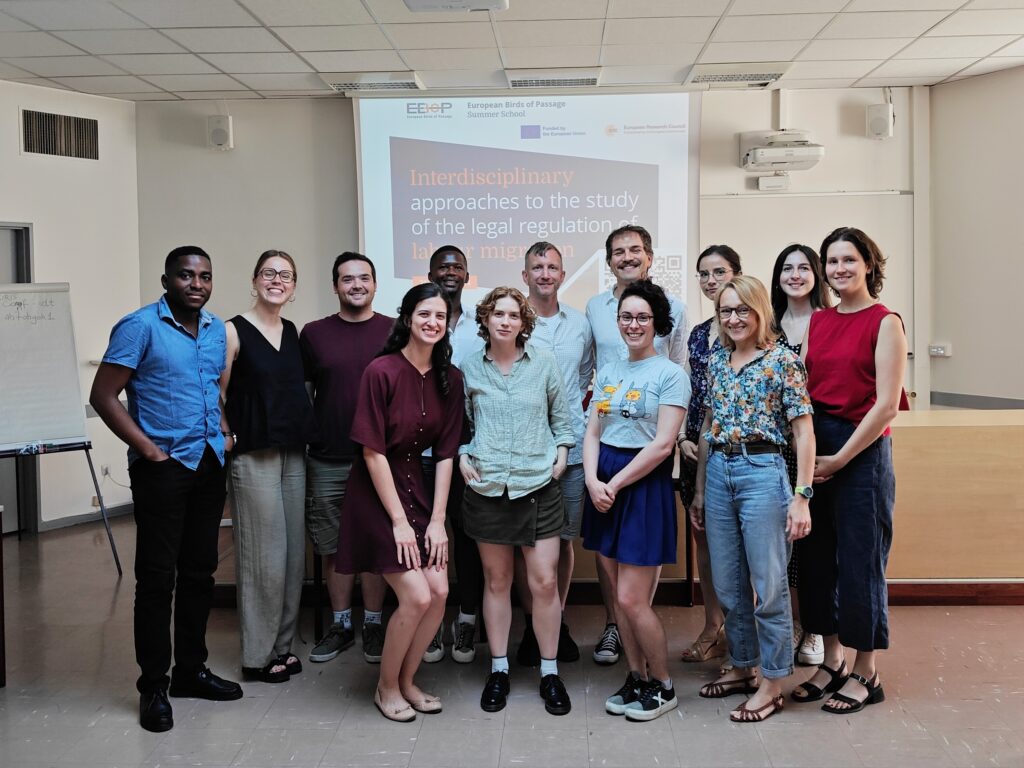
(the group picture, which of course we should have taken before several participants and speakers had left…)
Once again, we were extremely happy to see the outcome of our months of organising, and to enjoy the four thematic sessions and two feedback sessions. The former were organised around four approaches, each delivered by colleagues with direct experience in applying them:
- Gender/Feminist/Intersectional Approaches (Inga Thiemann and Audrey Deverson)
- Sociolegal approaches (Natalie Sedacca and Marta Lasek-Markey)
- Quantitative approaches (Justyna Hjman-Mancewicz and Daniel Elanga Mendogo)
- Law-as-Data (Audrey Plan and Marco Rocca)
We were also happy and honoured to have Tonia Novitz deliver our welcome address. As visible from the list of speakers, this time the E-BoP team was mobilised: beyond our PI, Audrey Deverson (still fresh from obtaining her PhD) reflected on her own experience in applying an intersectional approach in her thesis, while Justyna and Daniel presented their own experience as quantitative researchers working with labour lawyers.
As for the thematic session, each of the participants got to present a piece of ongoing research and received feedback on it (and then discussed it with the whole group). As for the first edition, these moments were particularly interesting, and the group manage to create a space for exchange which was at the same time safe and enriching.
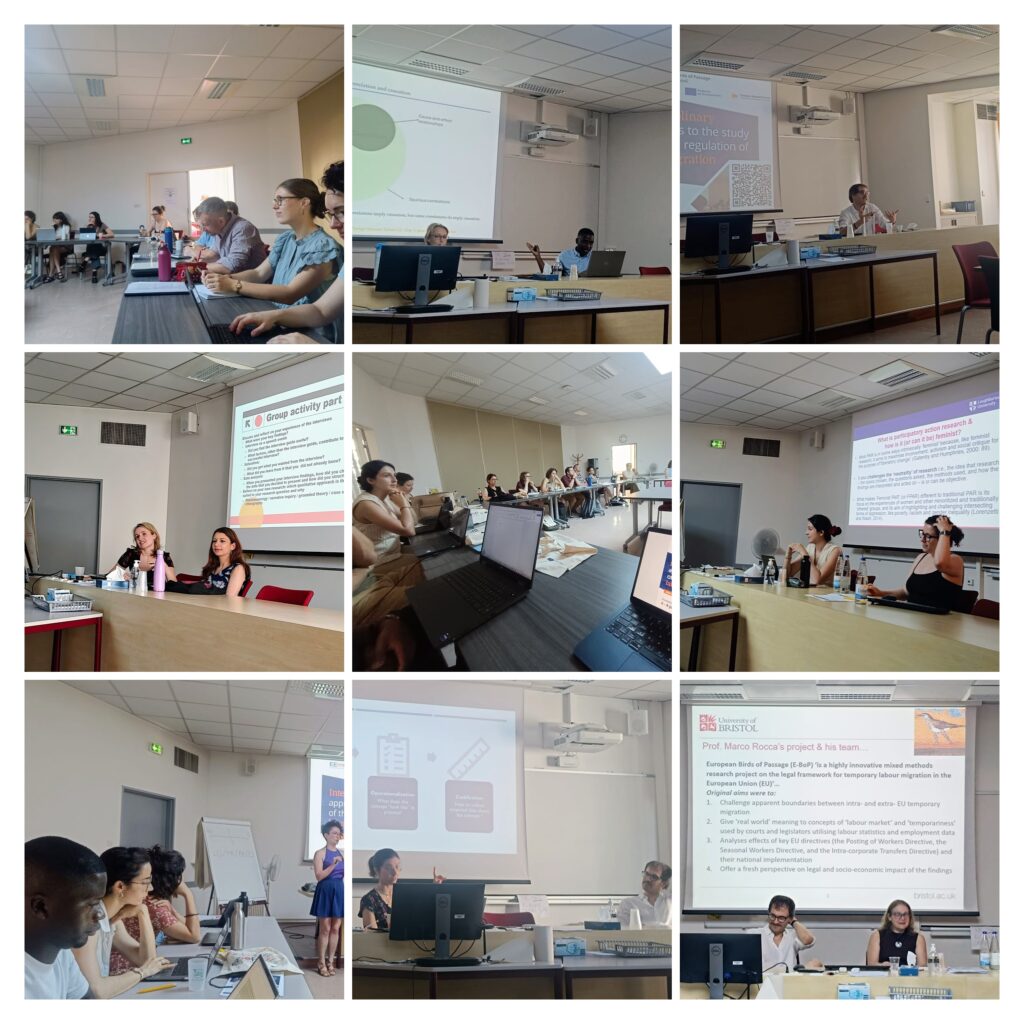
Compared with the discussions we had during the first edition of the Summer School, this year’s cohort of participants (all of them early career researchers) encountered much fewer challenges and obstacles in engaging in interdisciplinary work. Of course, much of this might be explained by the different institutions, research centres and labs from which they hail (there was no overlap with the cohort of 2024), but we’ll decide to take it as sign of a greater openness of legal academia to an early engagement with interdisciplinarity.
As European Birds of Passage is ending in 2027 (time… flies), this is our last Summer School. The whole E-BoP team treasures the fond memories made, as well as the many ways in which the insights, discussion, and connections have improved our respective research.